A Two-Week Cardboard Design Journey: Crafting a Mini House with a Tiny Garden
Type of project:
Individual class project
Date:
4/29/2022 – 5/14/2022
Tools:
Adobe Illustrator, Microsoft Whiteboard, Notes
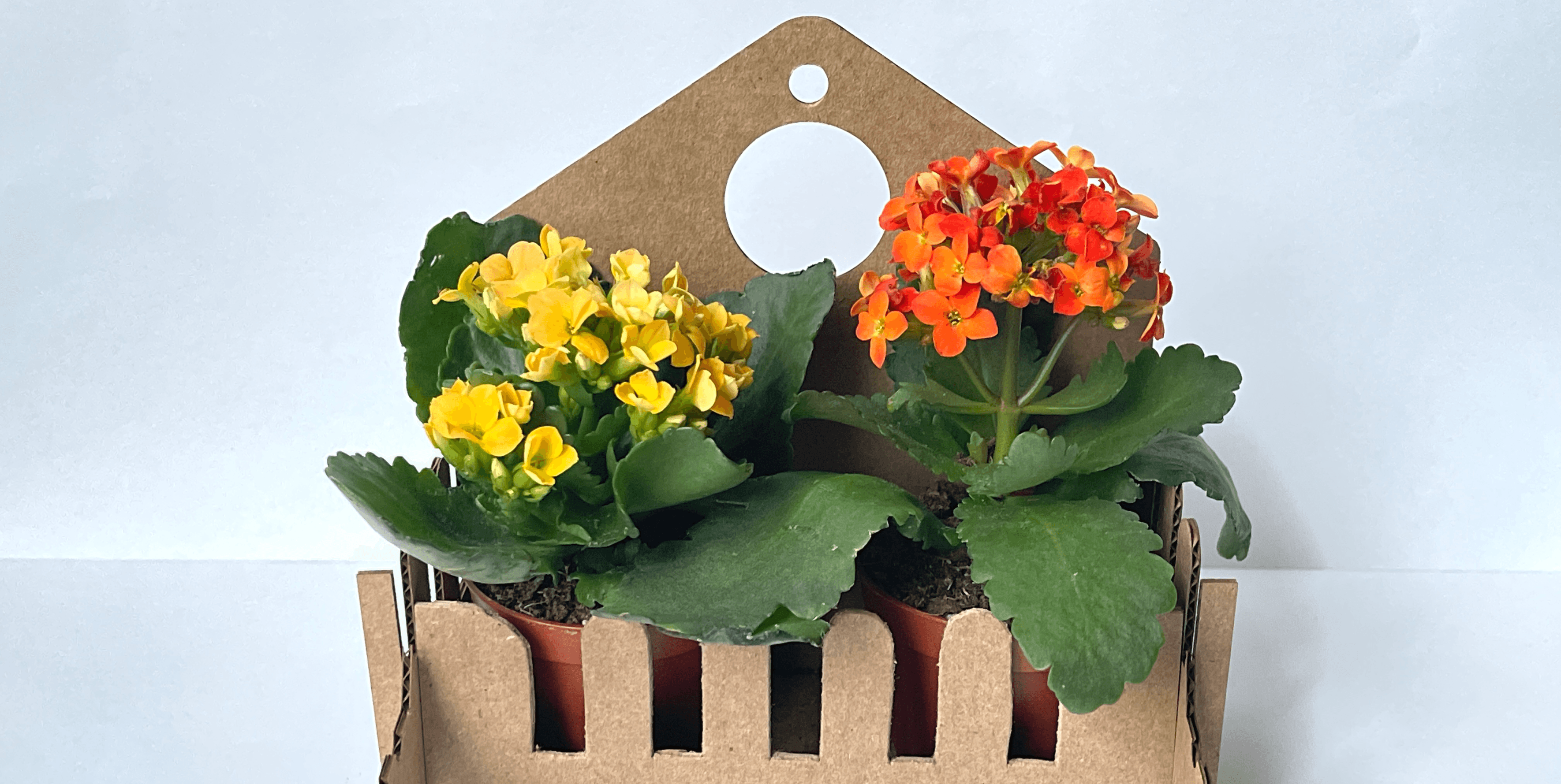
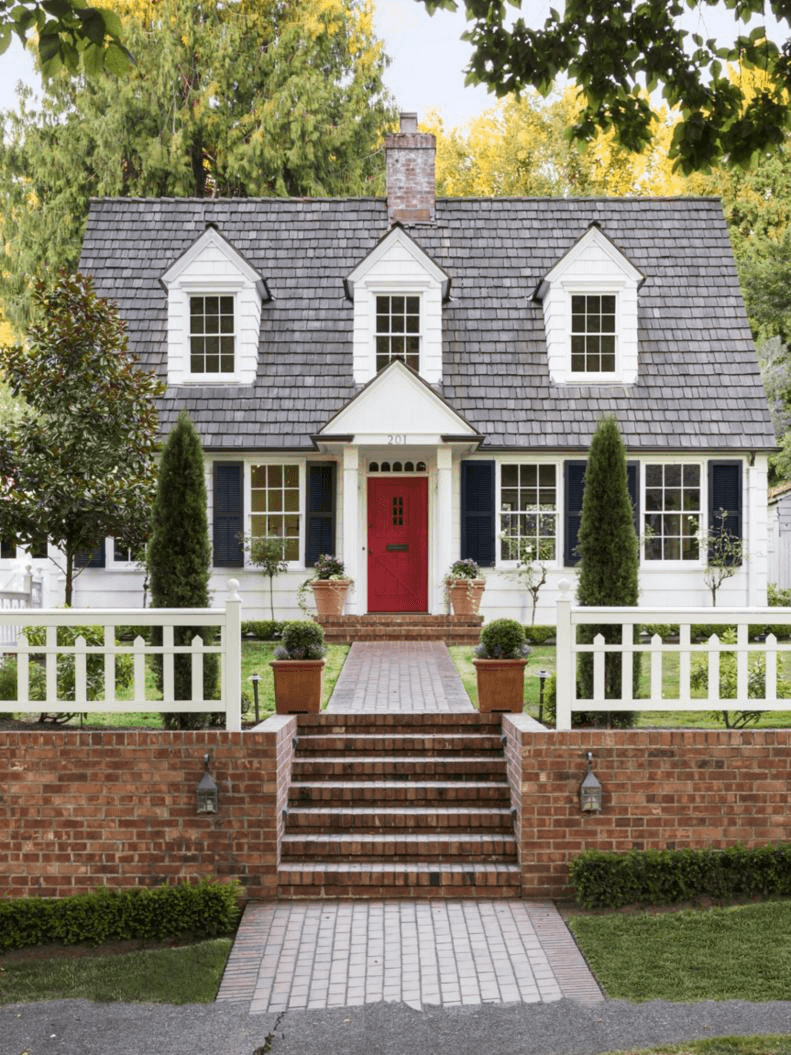
A Mini House was a two-week cardboard design project completed during my Design Foundations class. This plant package was created using E-flute cardboard, ranging from 6 inches to 4 inches, and was cut with a laser cutter machine. I was inspired by a mini house that had its own tiny garden.
A more sustainable plant packaging
“How might we develop a transformative and sustainable plant packaging solution that transforms the options currently available at plant shops?”
Must use a 16" x 32" sheet of E-flute corrugated cardboard.
Design must use no more than 3 separate pieces.
No glue, tape, or other commercial fasteners may be used.
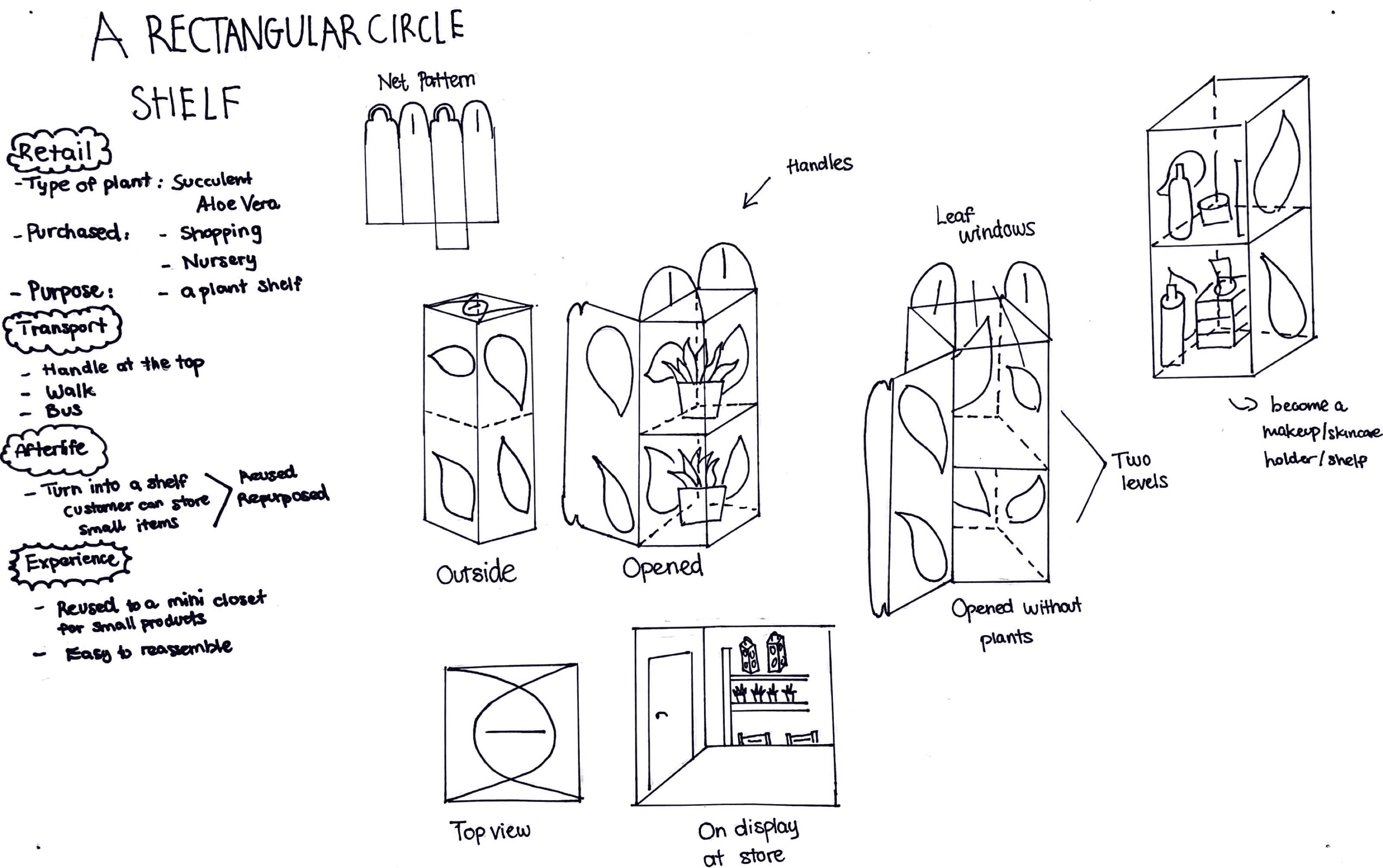
First Idea Sketch: A Rectangular Circle Shelf
Second idea: A Mini House
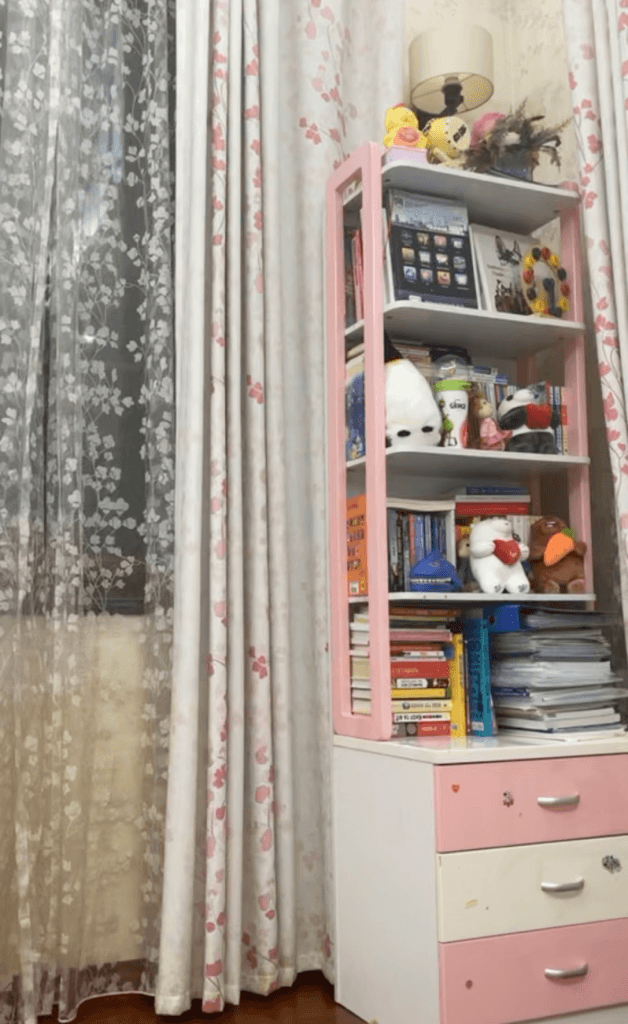
The first idea I came up with is a rectangular, circular shelf inspired by my home bookshelf that can hold books. In this case, this rectangular shelf can hold two plants, especially succulent plants. The plant handle on top makes it easy for users to carry the plants around. Later on, users could use this two-level shelf as a makeup shelf.
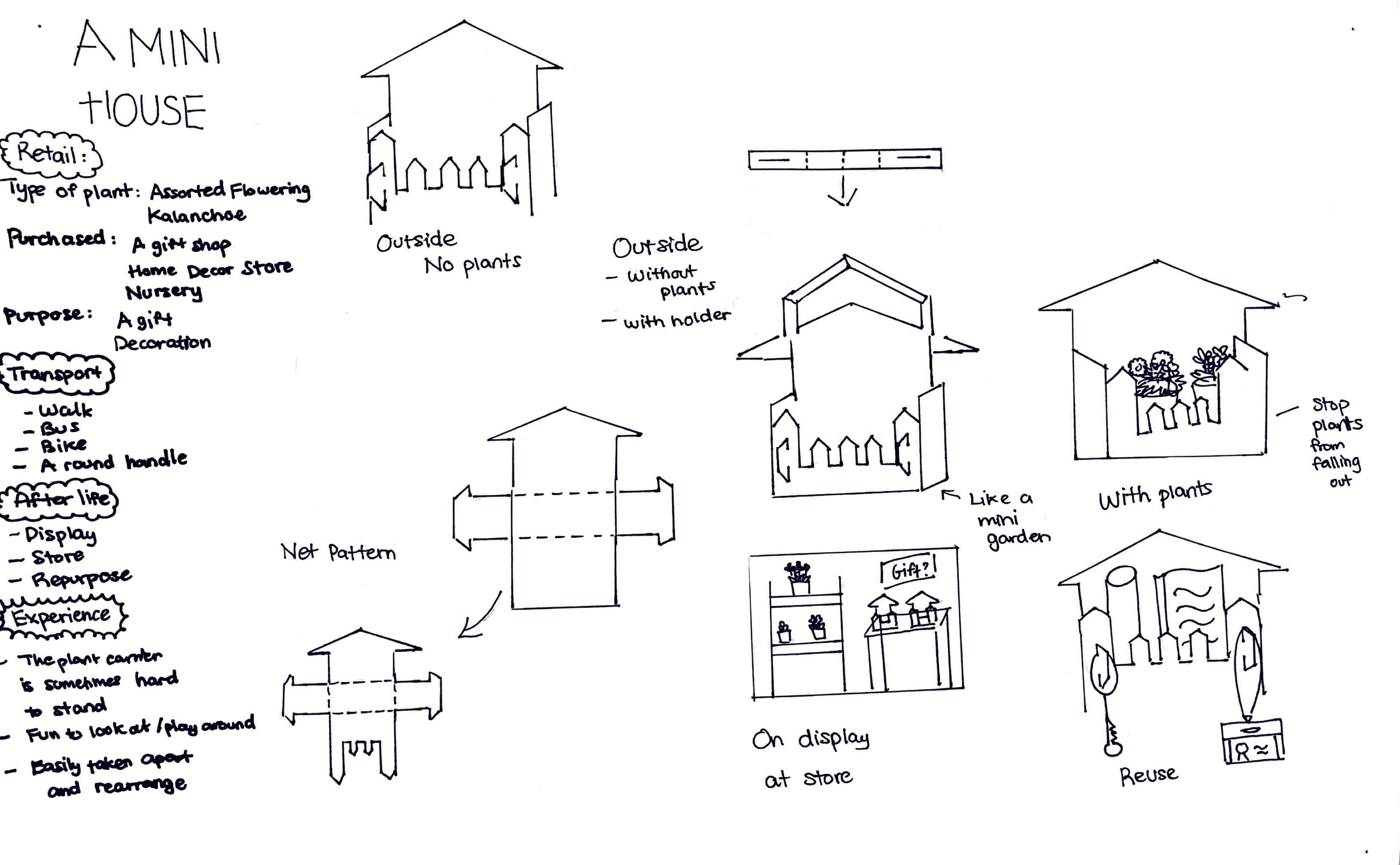
The second idea I came up with is a mini house, inspired by my deep love for home because nothing else truly feels like home. I plan to fill this plant package with assorted flowering plants to make the house more cheerful. The mini house would make a great gift for loved ones as it symbolizes love and care. It could also be repurposed as a house decoration and used as a key holder.
First Handmade Crafted Plant Package Box
The Chosen Design: A Mini House
Feedback and Incorporation
Testing out different Mini House versions
Finalized Mini House Version
Reduce spacing between two plants
This rectangular shelf was hand-cut using a precision knife on E-flute corrugated cardboard. The most challenging aspect was the small details such as flaps, leaves, and arrows, which required precise slicing to ensure that the box could close fully. However, thanks to accurate measurements of the plant size, I was able to cut the right amount to hold the succulent plant securely. The arrows and leaves on the outside serve as windows, allowing sunlight to enter and the plants to breathe.
The second idea I came up with is a mini house, inspired by my deep love for home because nothing else truly feels like home. I plan to fill this plant package with assorted flowering plants to make the house more cheerful. The mini house would make a great gift for loved ones as it symbolizes love and care. It could also be repurposed as a house decoration and used as a key holder.
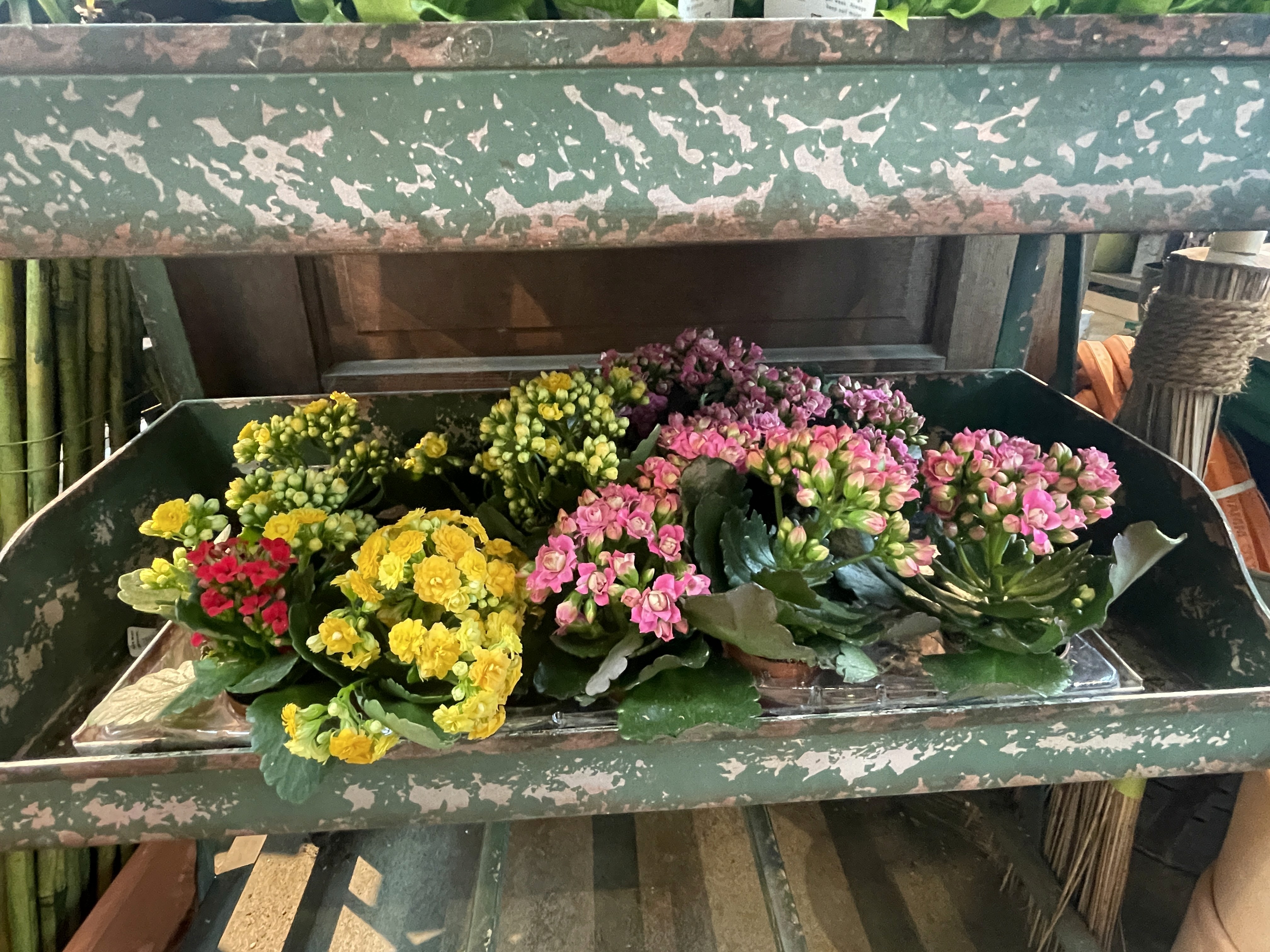
Plant: Assorted Flowering Kalanchoe
Convenient to carry around
Plants are clearly visible
Effortless to insert plants
Too much space around the plant package
Too many unnecessary details around the box
An inconvenient size for carrying around
The handle is better suited for hanging the plant package than for carrying it
“The pointy fence might hurt the user's hand while putting the plants into the plant package. ”
“There is negative space between the two plants. You can see that while holding the plant package, the plants keep moving around.”
I changed the fence shape to be more rounded so users won't be afraid of placing their plants into the plant package.
I changed the fence shape to be more rounded so users won't be afraid of placing their plants into the plant package.
“The holes are not suitable for every plant size, and you might drop the plants”
Version with two plant package holes at the bottom
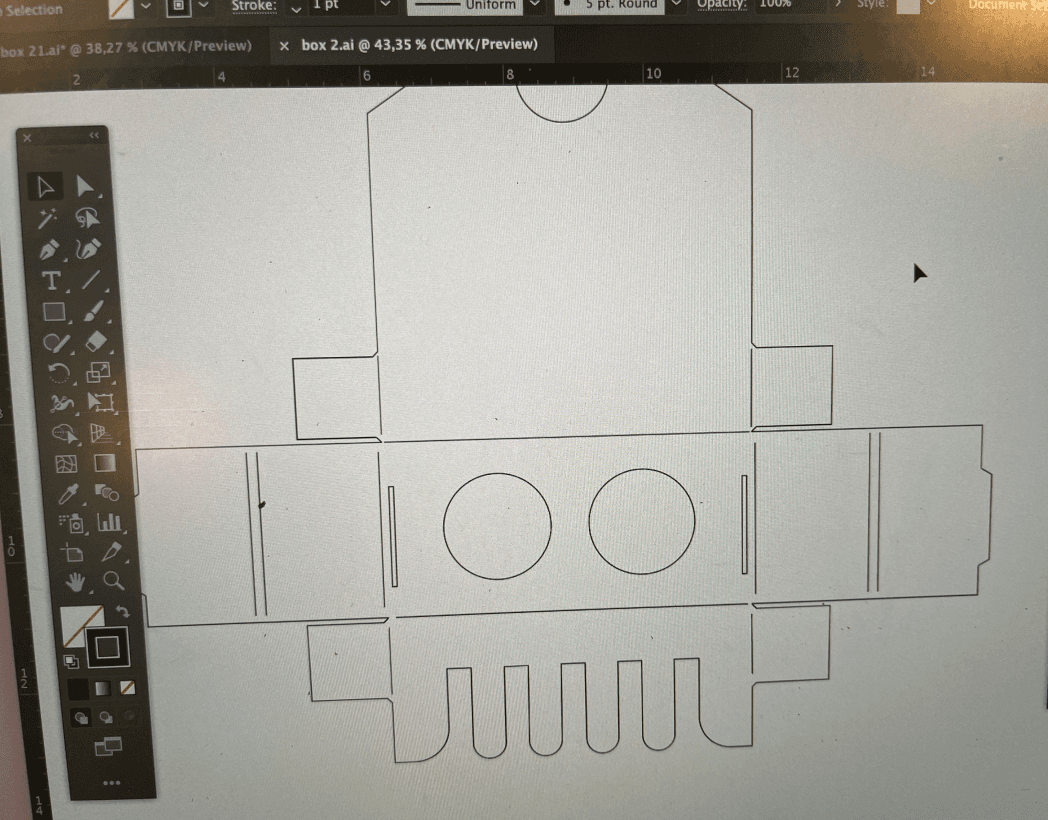
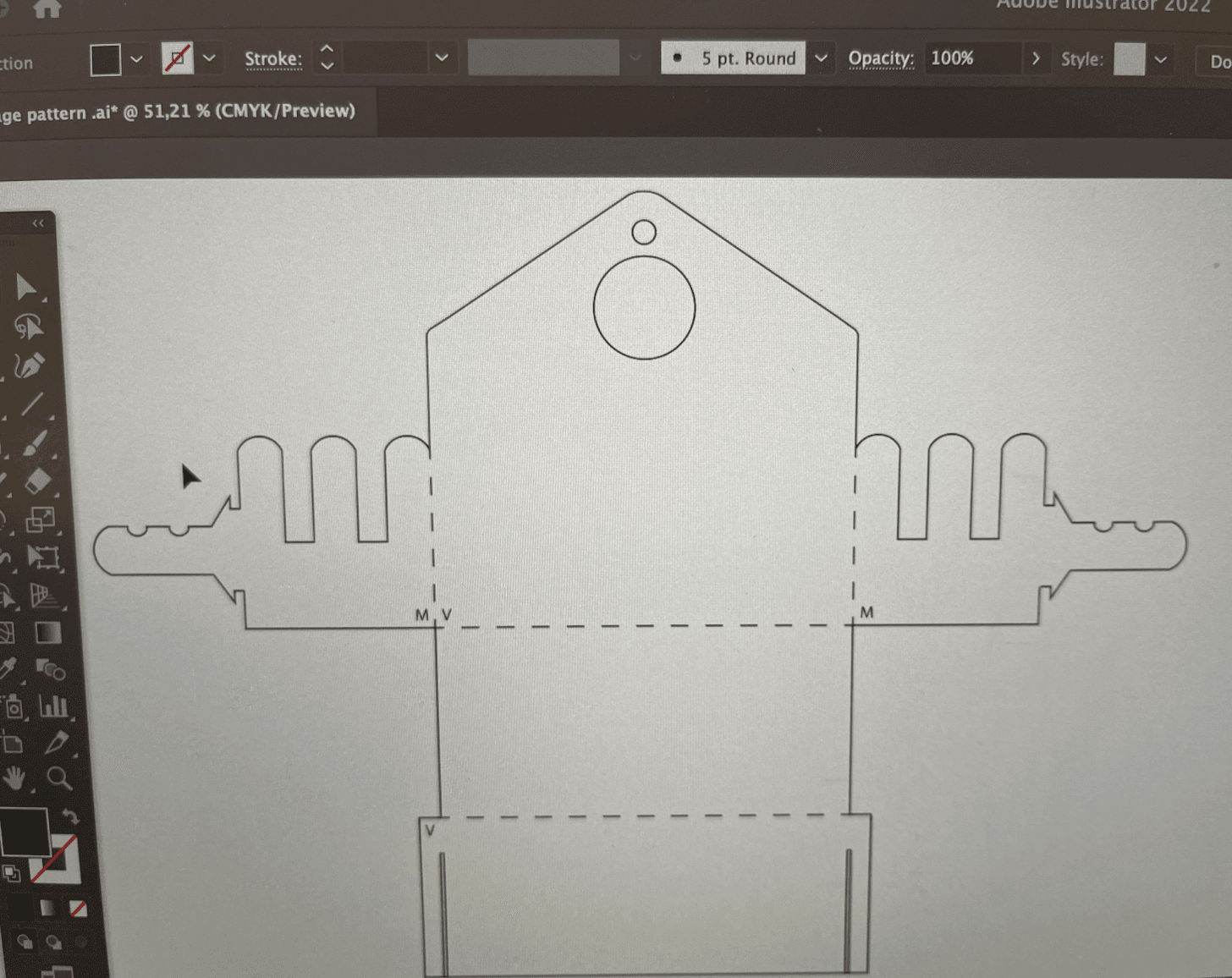
The net of the plant package
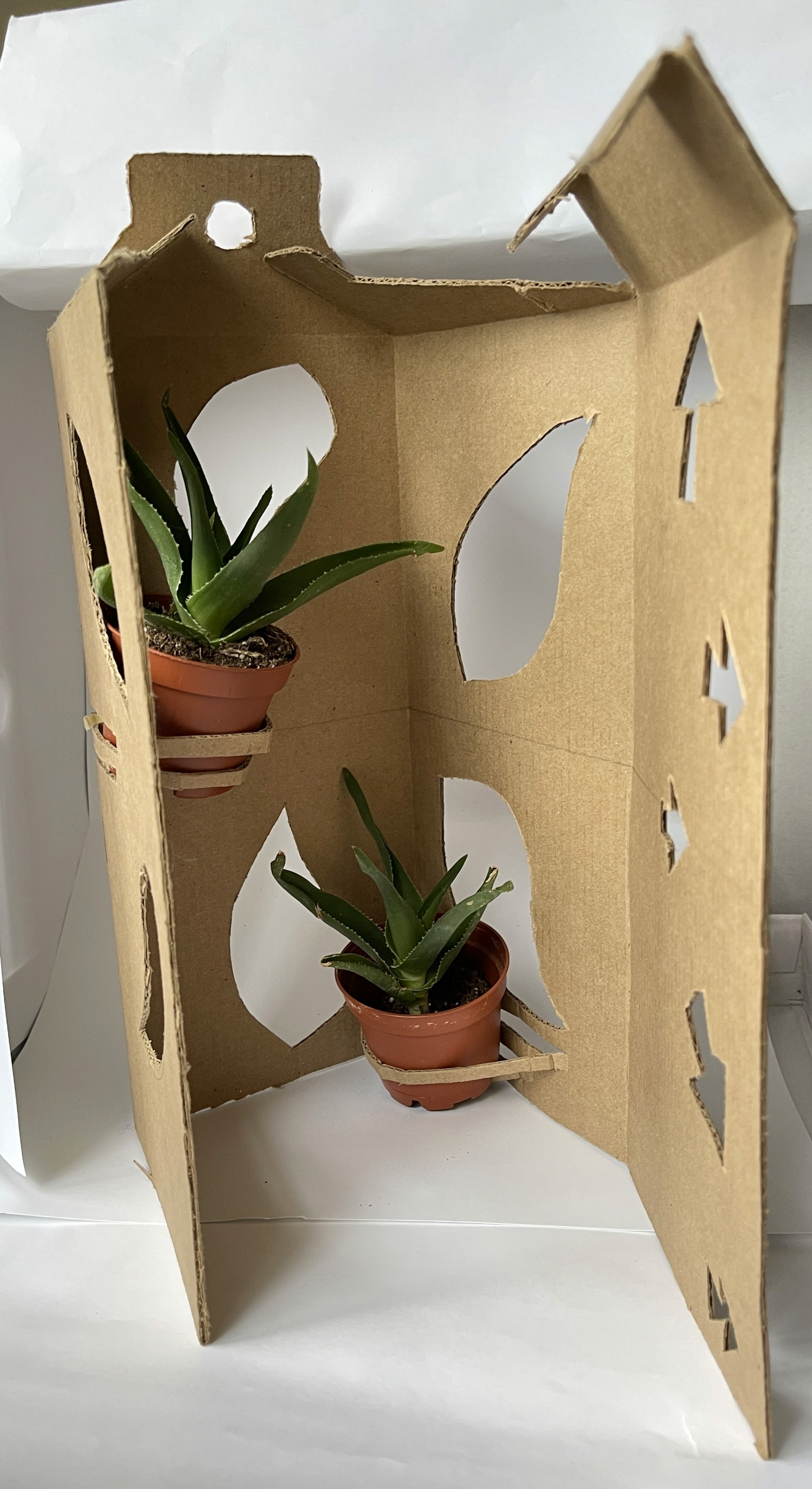
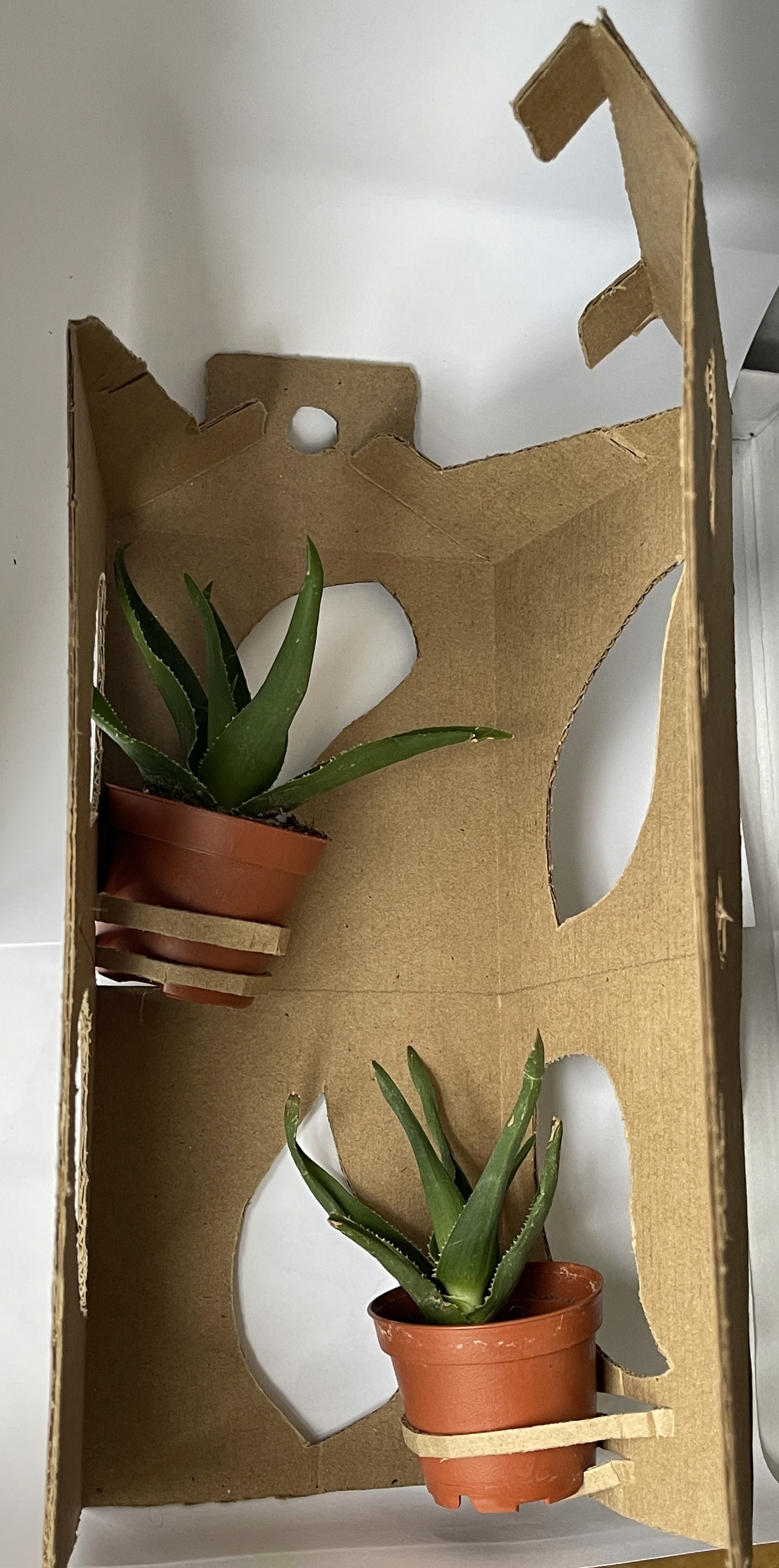
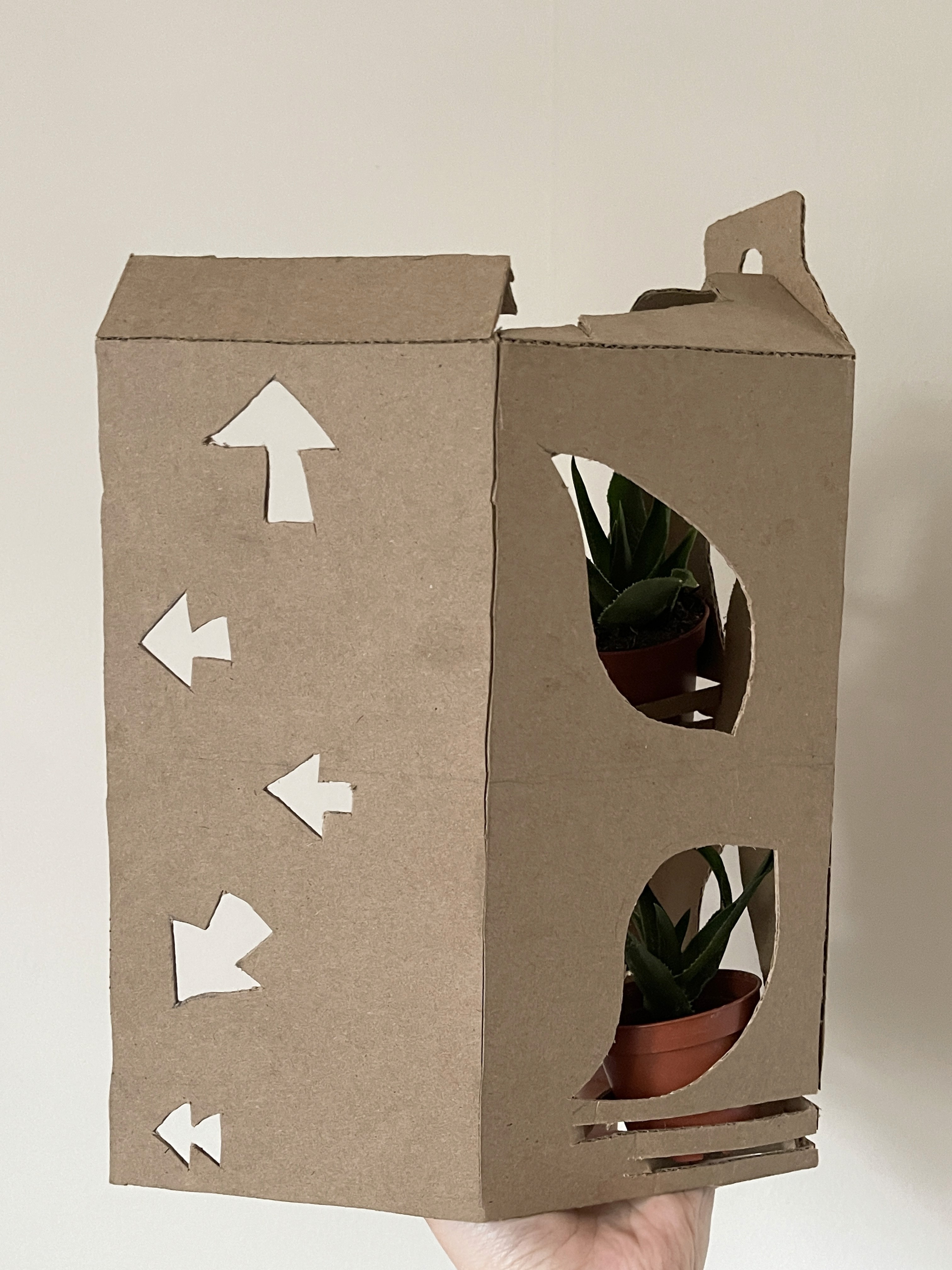
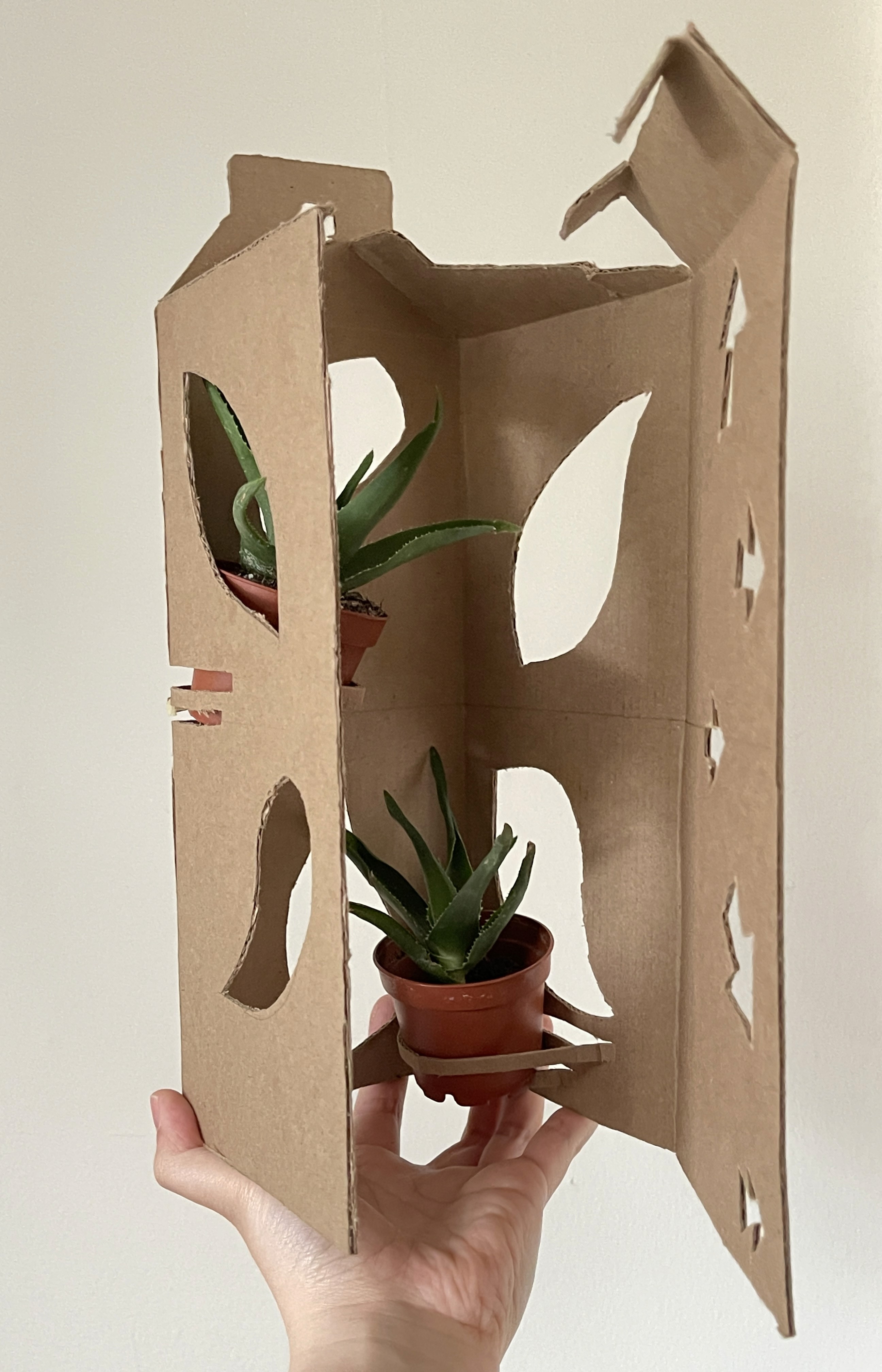
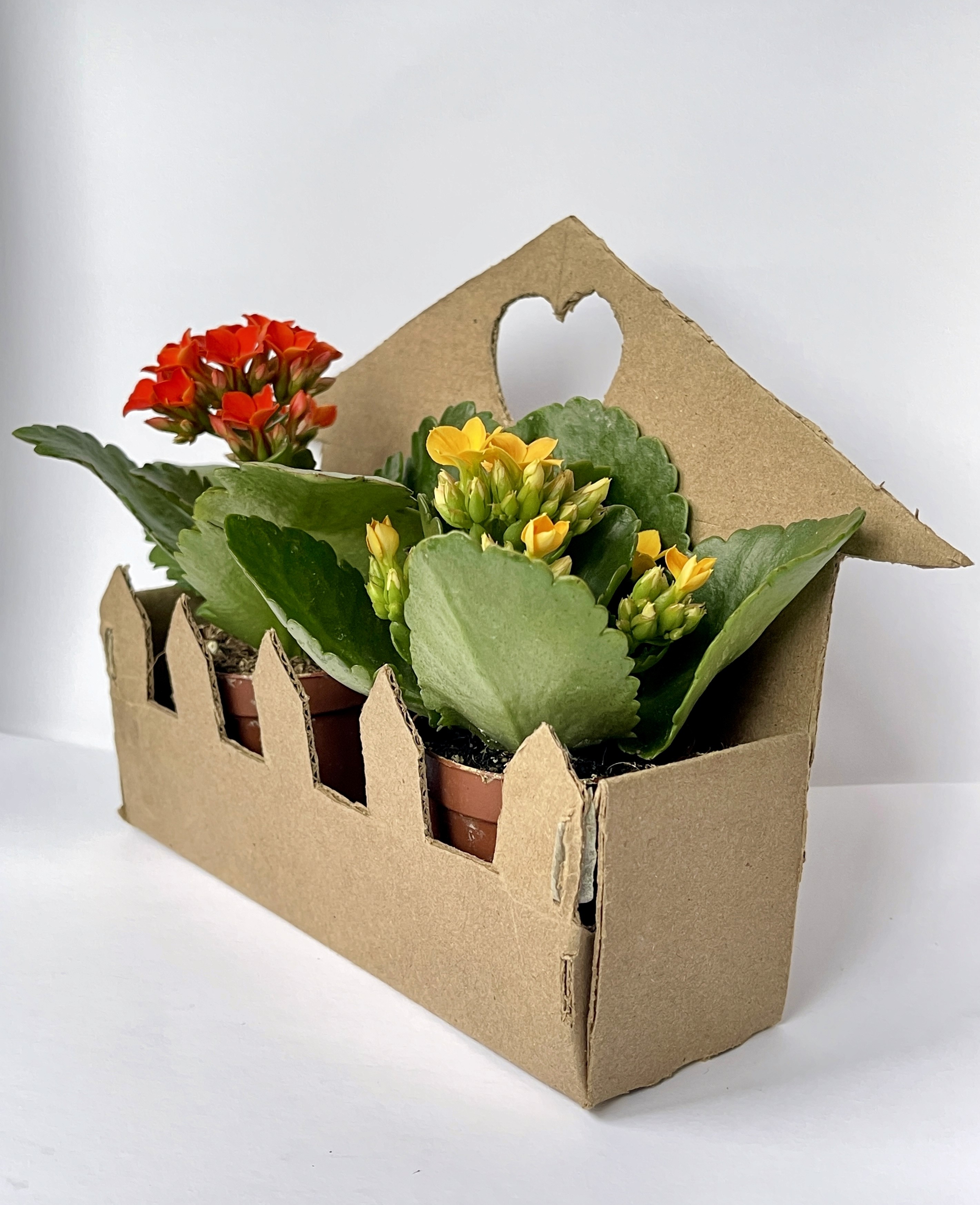
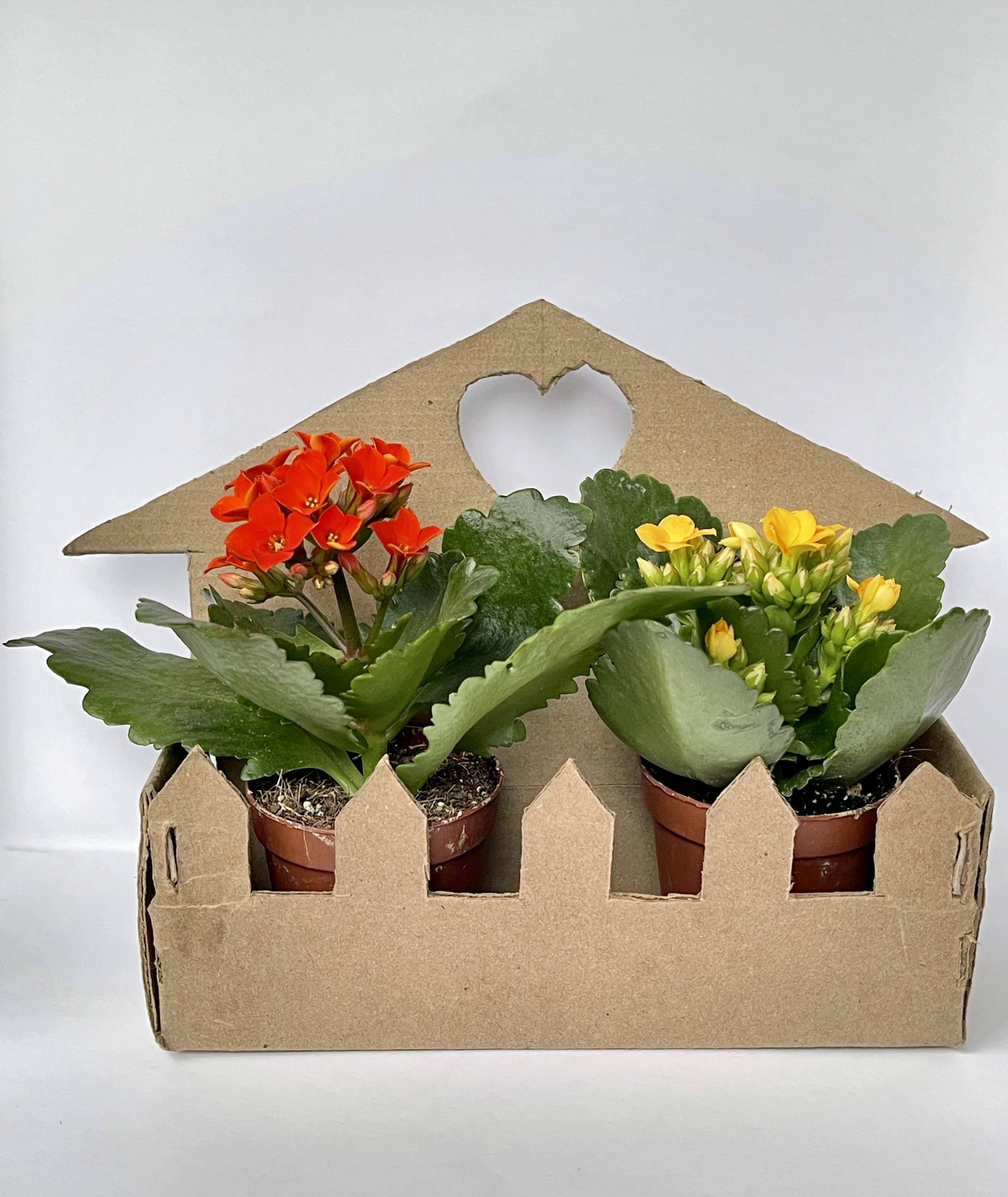
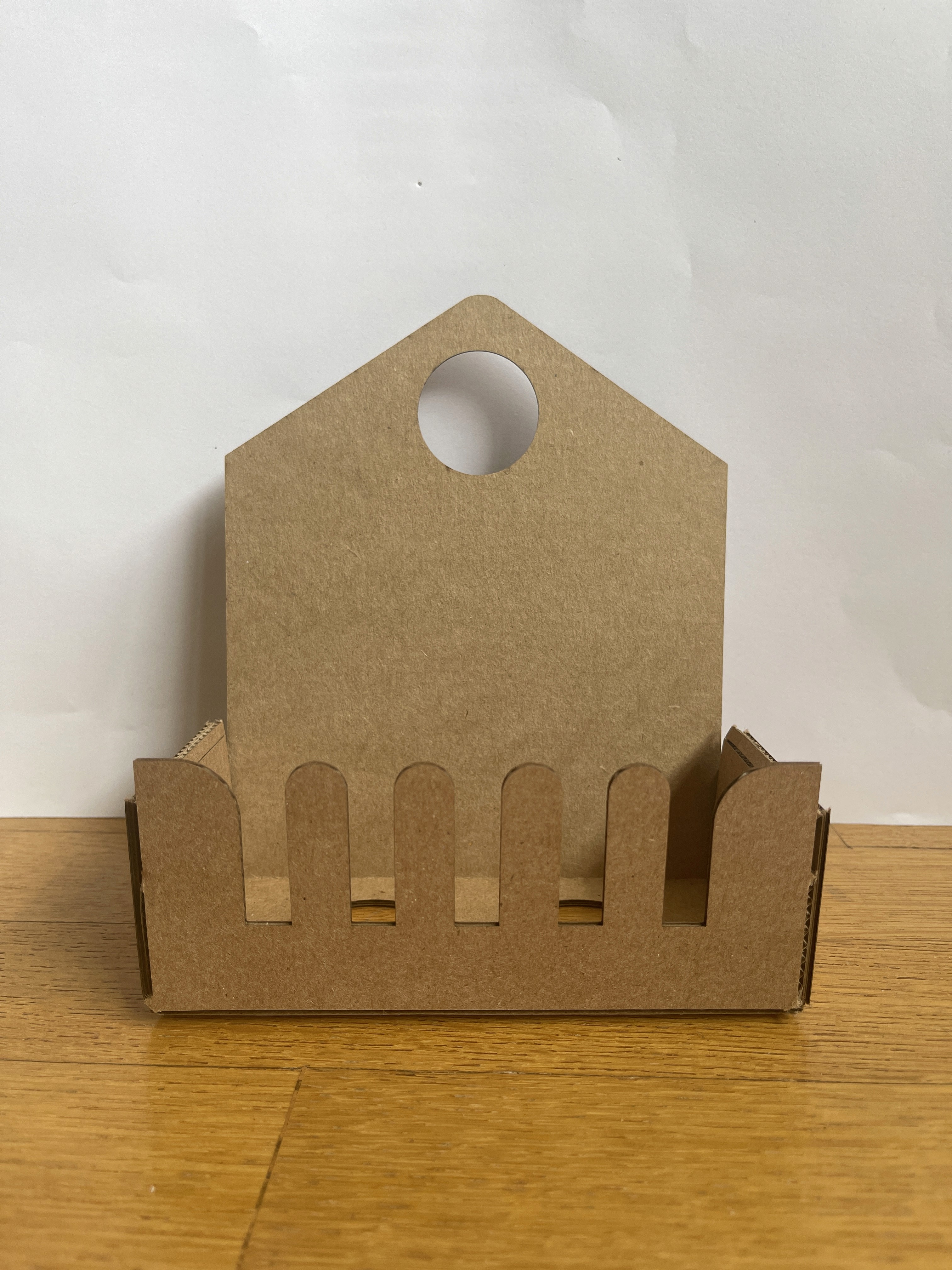
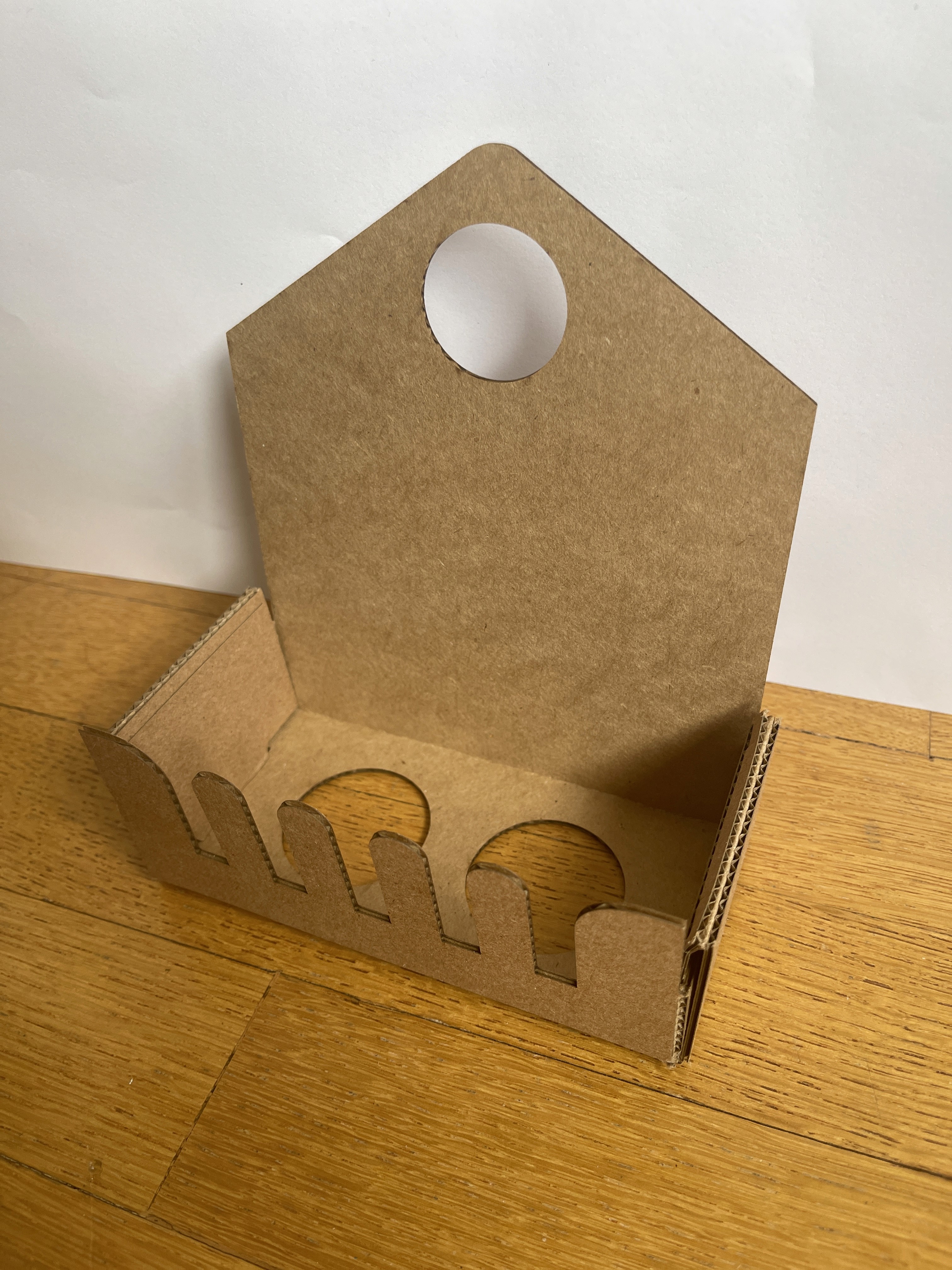
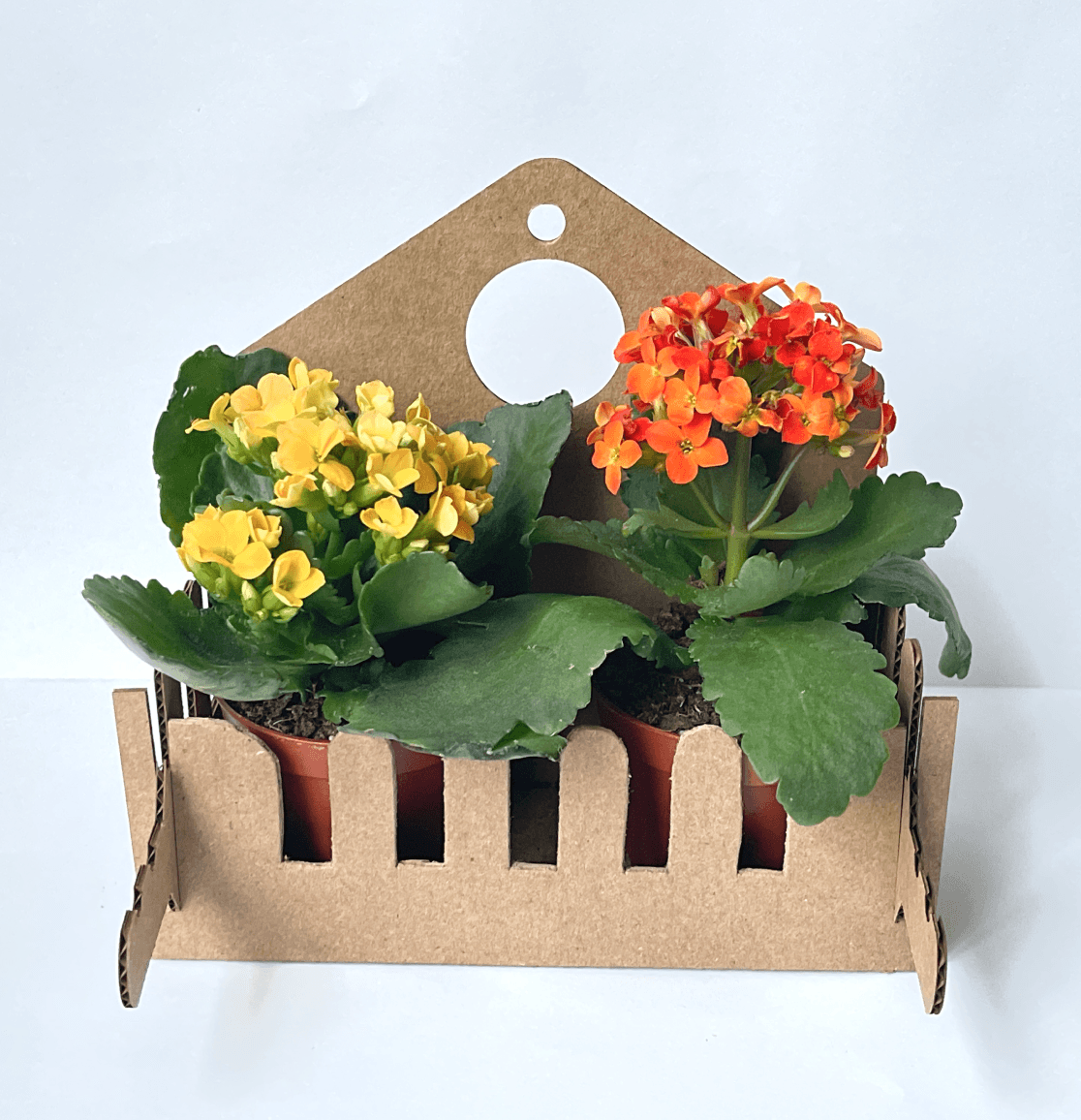
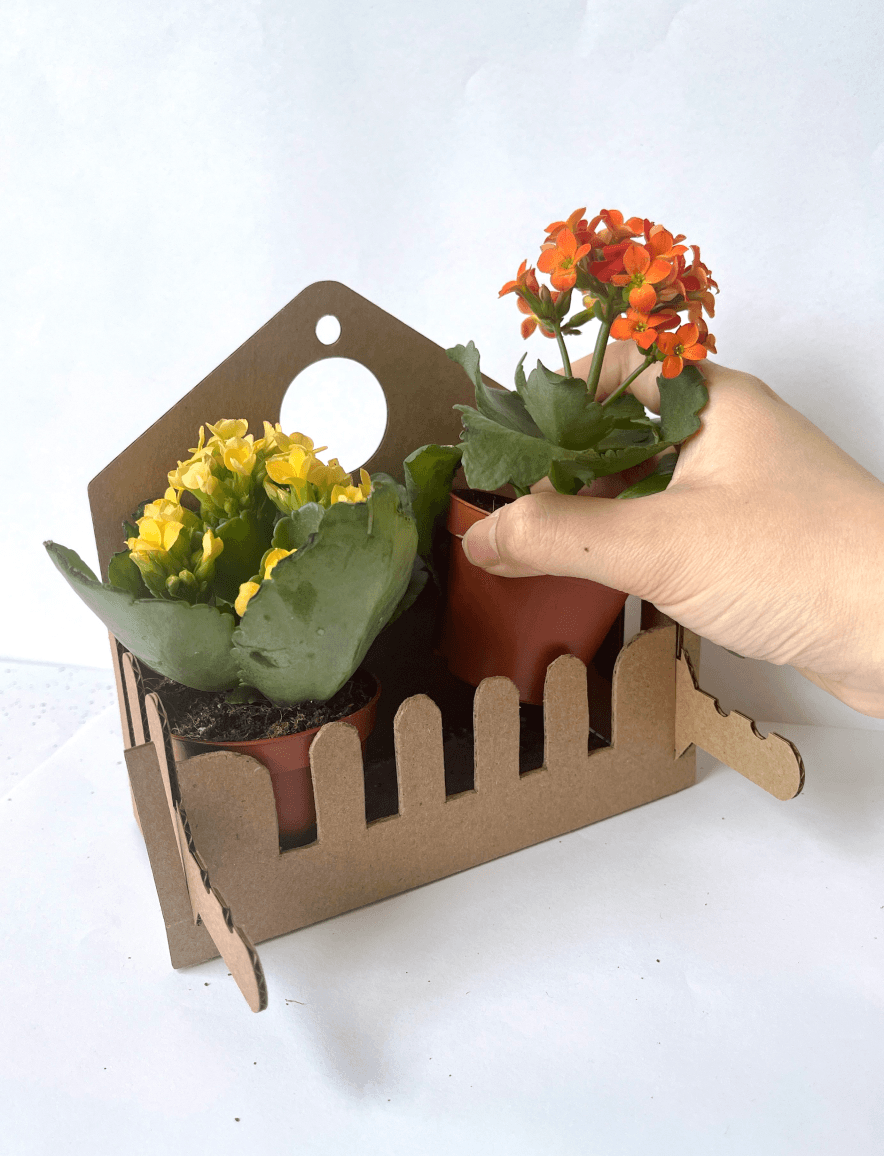
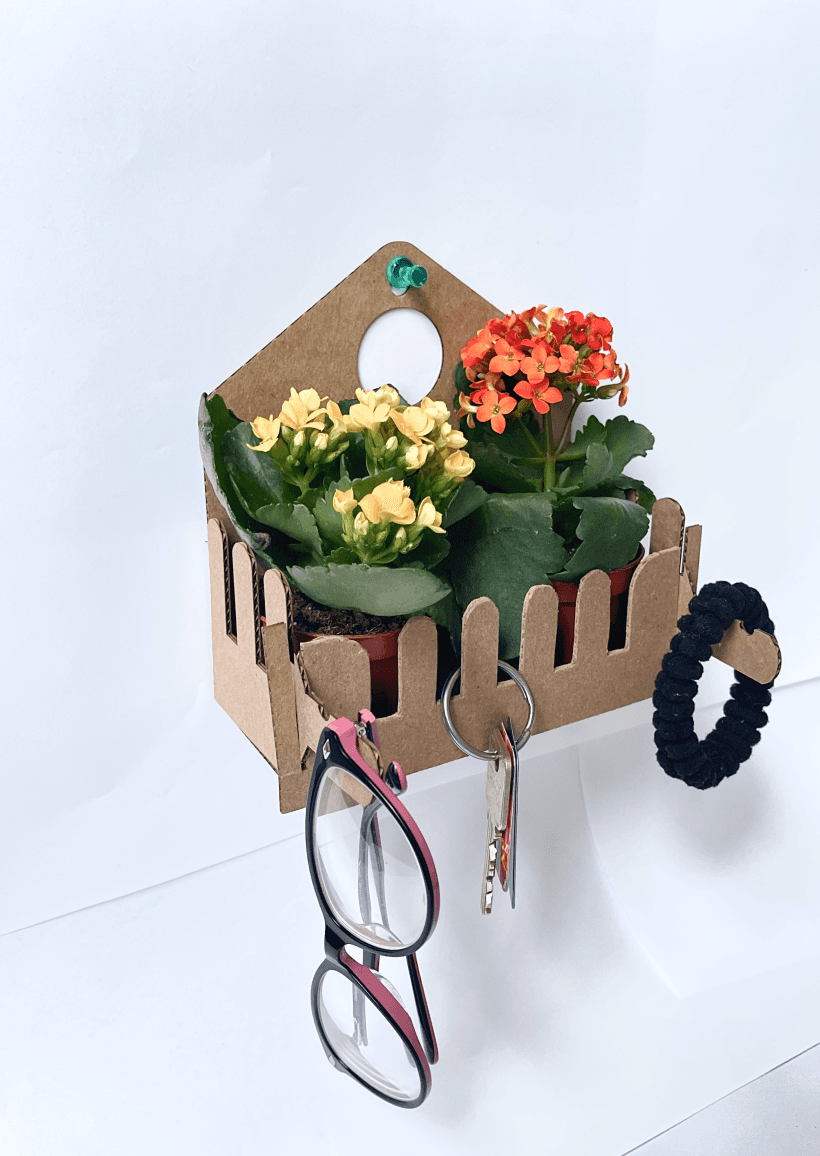
After gathering all the feedback from my TA and peers, this is my finalized version of the Mini House. I ensured that this version could fit two plants and minimized the negative space. All the fences have rounded corners for easy insertion of plants into the plant package, as shown in the second picture, and won't hurt users. There is also an afterlife feature for hanging keys, glasses, hair ties, or other small items, which is convenient for displaying plants and hanging small items.
Side view how users can use the Mini House
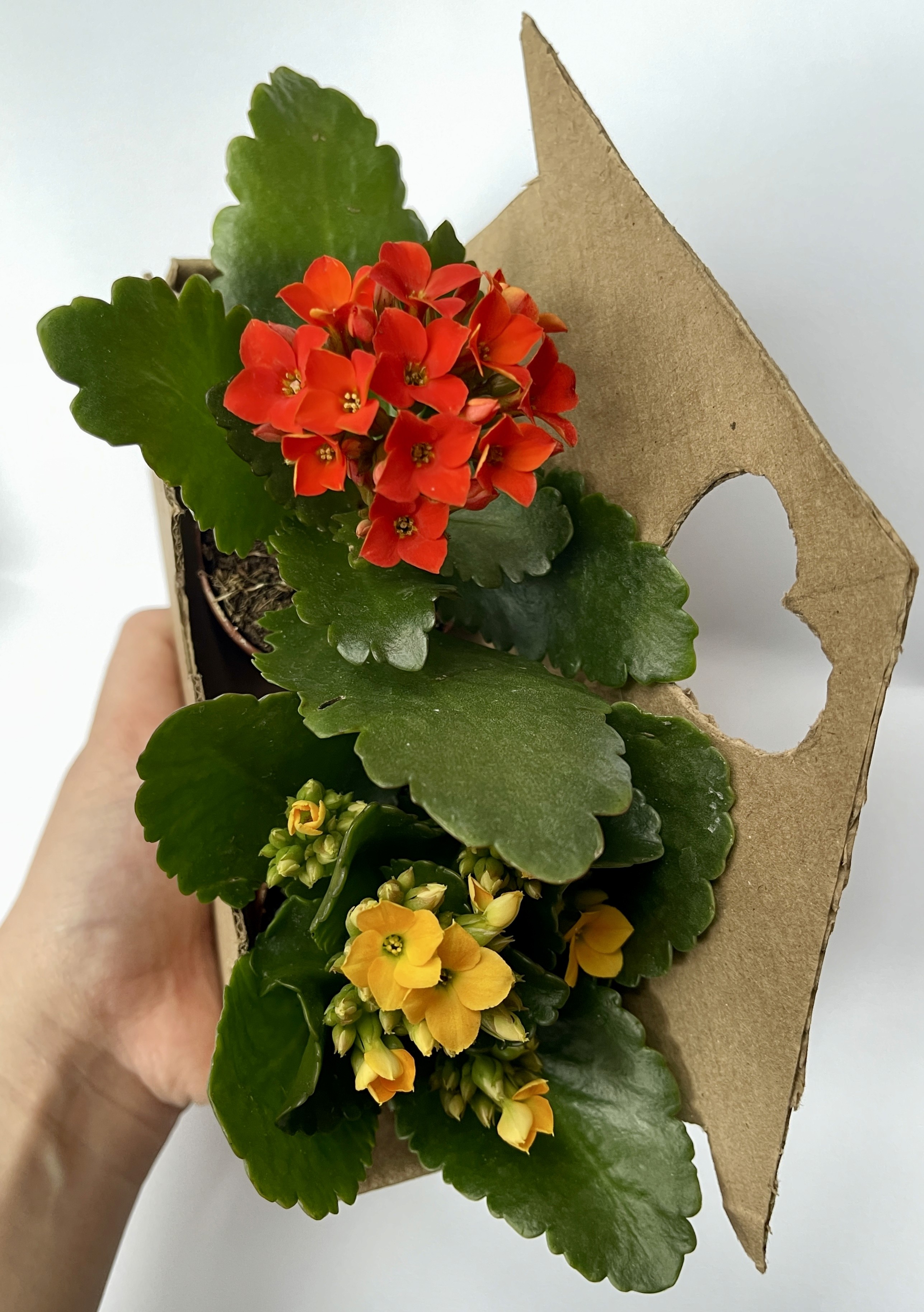
Afterlife use as small items hanger
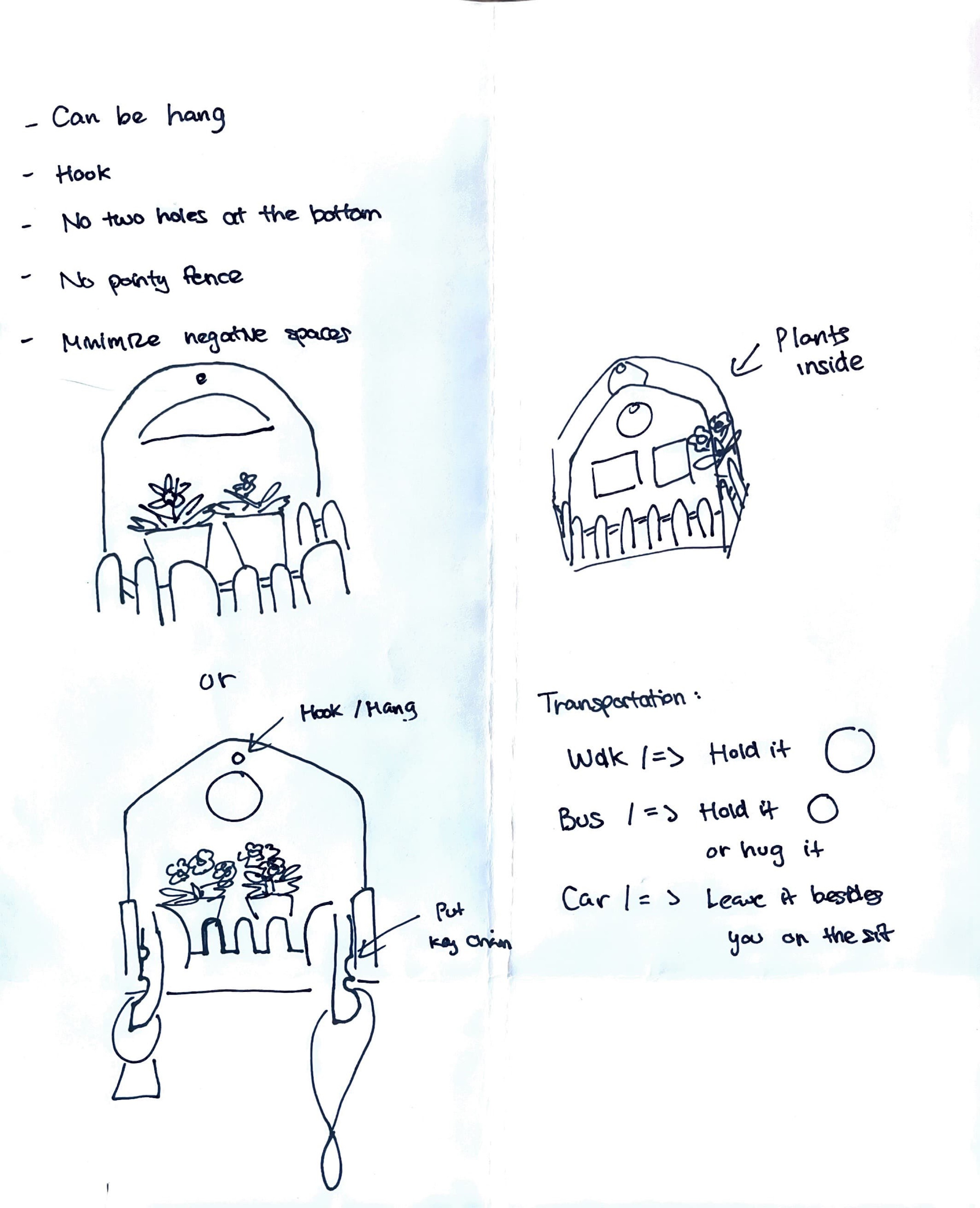
A brief sketch of what the finalized Mini House would look like
Throughout this project, I have put in a lot of effort and gained valuable insights, notably in industrial design
Having more materials than needed: I found that having extra E-flute corrugated cardboard is very useful as it allows me to test different designs to see if the plants fit and if there are excessive spaces. After each round of feedback, I tried out different versions and chose the best one.
How to use the laser cutter machine: I was happy to have learned how to use the laser cutter machine beforehand because it makes the cuts very clean. While assembling the different parts together, they fit well, which speeds up the process of building the plant package.
Function matters more than aesthetics: After many iterations of the plant package, I received a lot of feedback regarding additional details, like adding windows or a sun. These elements look pretty but do not help when carrying the plant package and might even increase the chances of the plant falling and breaking.
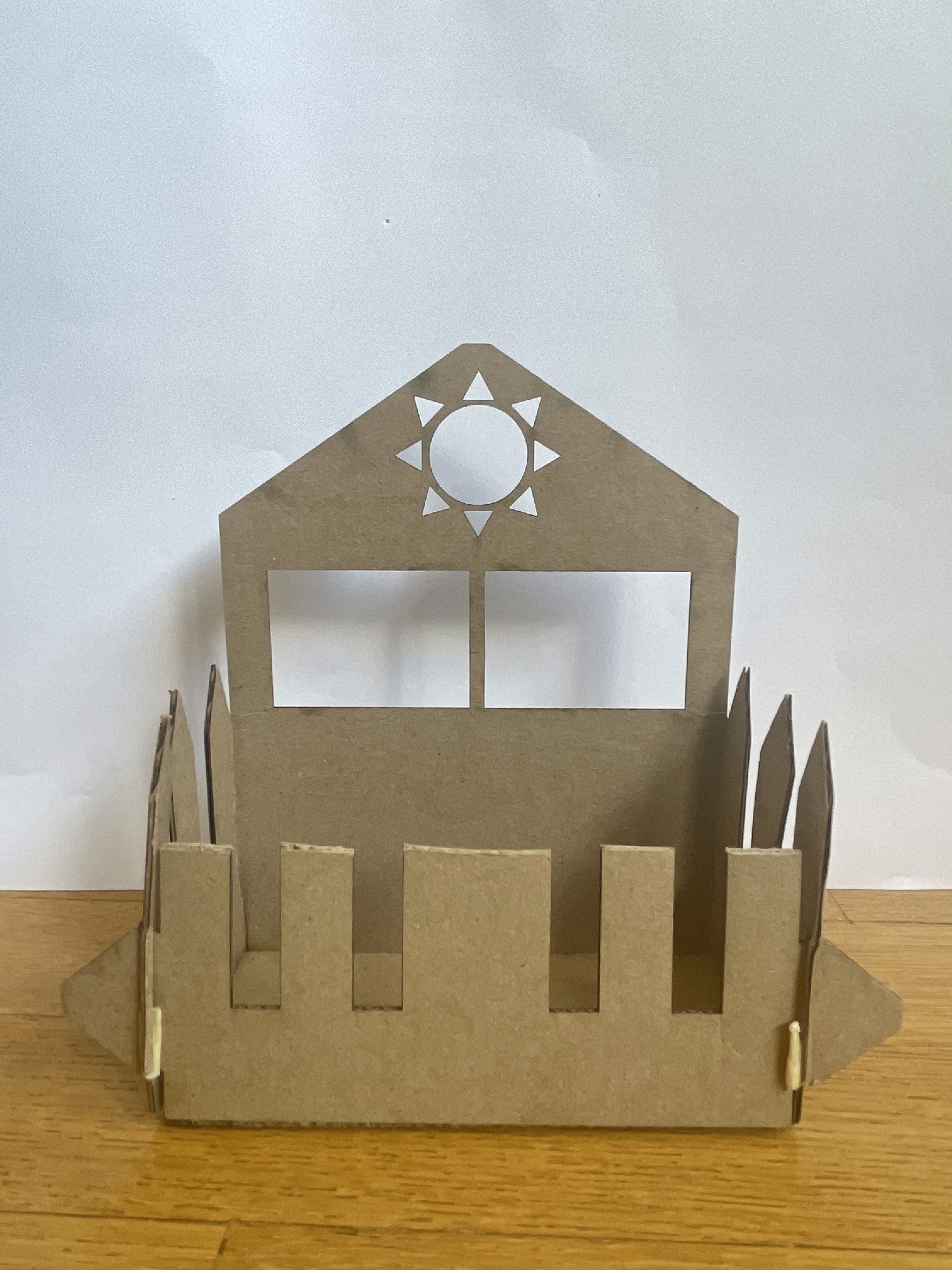
Version with two windows and fences around the plant package
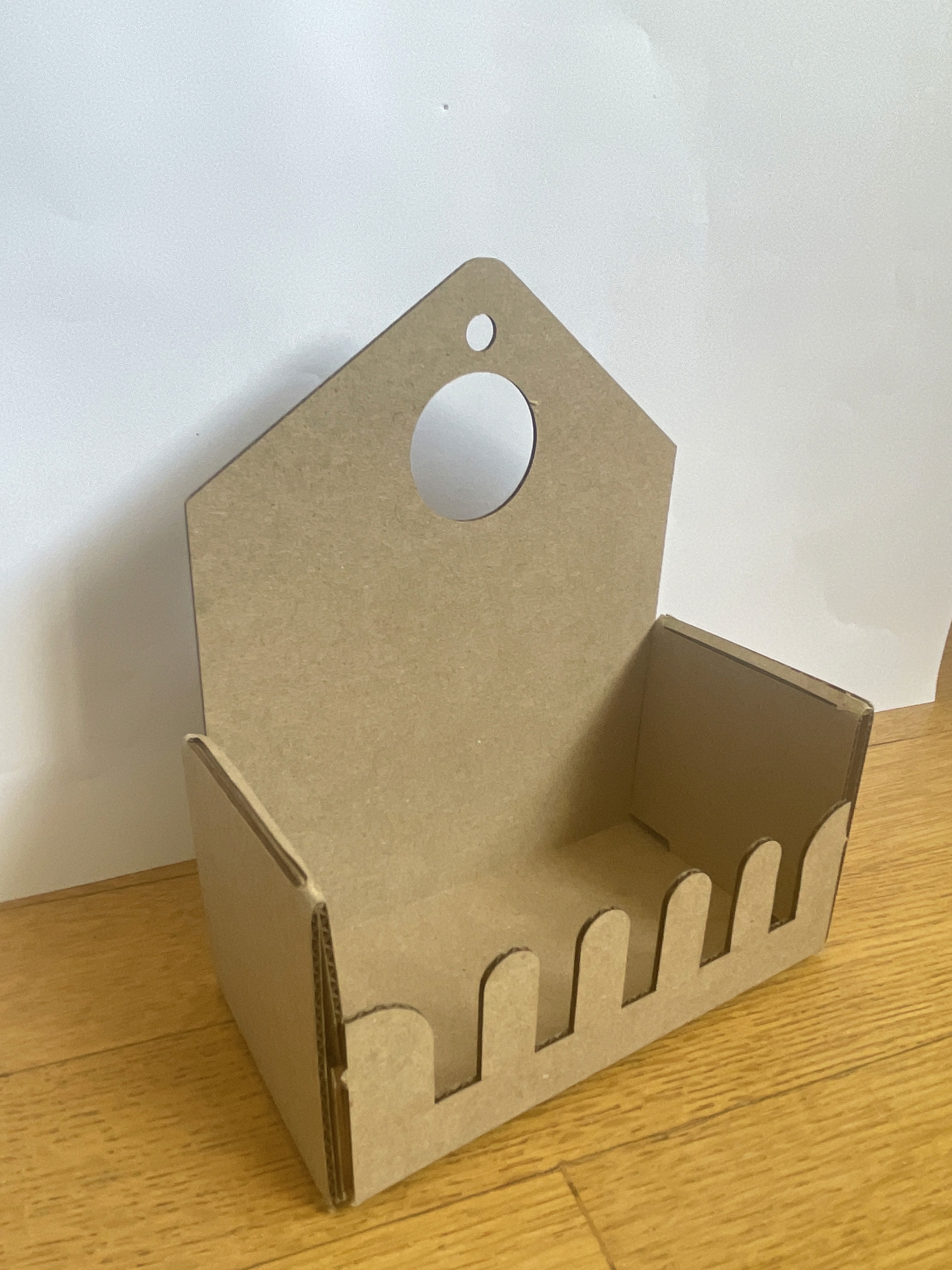
A more simplified version with rounded corner fences and hanging key components
Version 4 is cleaner, with rounded fences that make inserting plants easier. The plant package can be hung or carried around. However, the TA and peers also like the hanging keychain feature for its afterlife use.
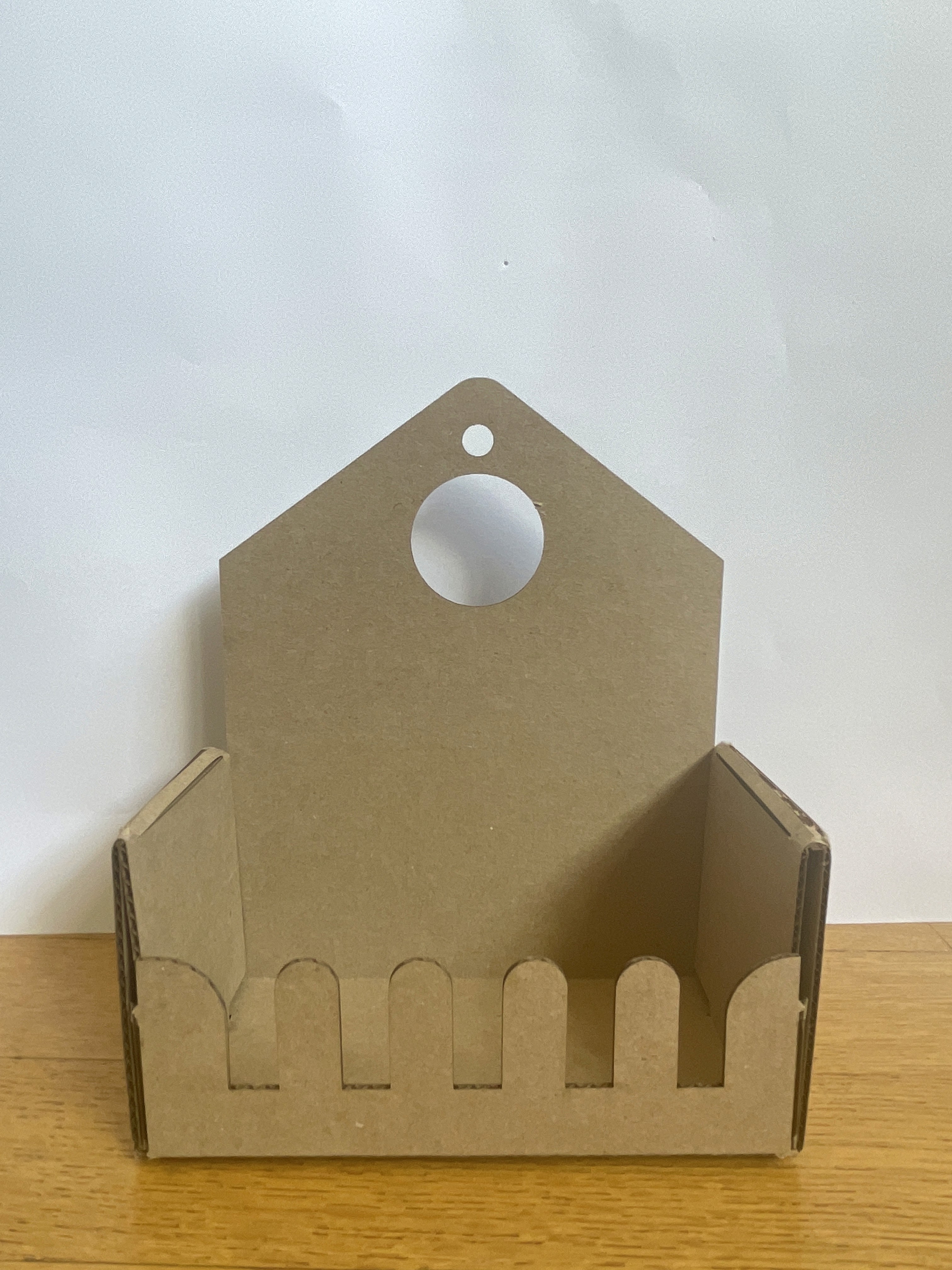
Version 2's fences are too sharp and might hurt users while inserting the plants, and it has too many details.
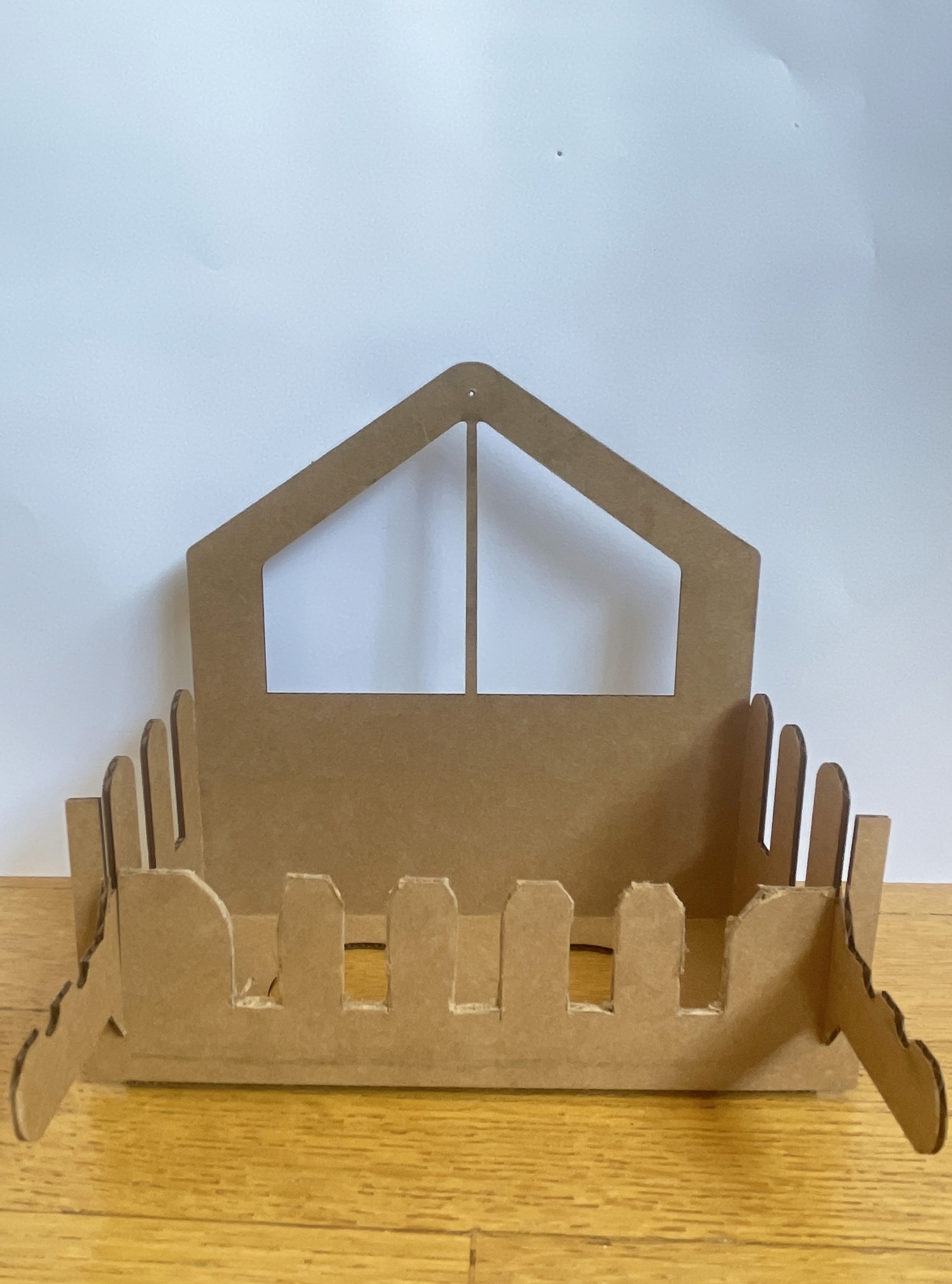
Version 3 includes a component for hanging key chains, but it still has two holes that could drop the plants. The cropped window is too wide, and the window divider appears fragile, easily tearing when handling the plant package.
Version with two windows and fences around the plant package
A more simplified version with rounded corner fences and hanging key components
Version 4 is cleaner, with rounded fences that make inserting plants easier. The plant package can be hung or carried around. However, the TA and peers also like the hanging keychain feature for its afterlife use.
Version 3 includes a component for hanging key chains, but it still has two holes that could drop the plants. The cropped window is too wide, and the window divider appears fragile, easily tearing when handling the plant package.
Version 2's fences are too sharp and might hurt users while inserting the plants, and it has too many details.
Afterlife use as small items hanger
Finalized Mini House Version
After gathering all the feedback from my TA and peers, this is my finalized version of the Mini House. I ensured that this version could fit two plants and minimized the negative space. All the fences have rounded corners for easy insertion of plants into the plant package, as shown in the second picture, and won't hurt users. There is also an afterlife feature for hanging keys, glasses, hair ties, or other small items, which is convenient for displaying plants and hanging small items.
A brief sketch of what the finalized Mini House would look like
Throughout this project, I have put in a lot of effort and gained valuable insights, notably in industrial design
Having more materials than needed: I found that having extra E-flute corrugated cardboard is very useful as it allows me to test different designs to see if the plants fit and if there are excessive spaces. After each round of feedback, I tried out different versions and chose the best one.
How to use the laser cutter machine: I was happy to have learned how to use the laser cutter machine beforehand because it makes the cuts very clean. While assembling the different parts together, they fit well, which speeds up the process of building the plant package.
Function matters more than aesthetics: After many iterations of the plant package, I received a lot of feedback regarding additional details, like adding windows or a sun. These elements look pretty but do not help when carrying the plant package and might even increase the chances of the plant falling and breaking.
Side view how users can use the Mini House